
The most common condition underwriters see, and one where good control routinely earns Standard rates or better.
Last reviewed October 2026 by Dev Gaymes, Texas-licensed life insurance agent, NPN 16654074 · Editorial policy
High blood pressure is the most common condition underwriters see, and it is no longer treated as an automatic decline anywhere. Controlled hypertension on one or two medications routinely qualifies for Standard rates, and Preferred is achievable. What decides the outcome is your recent numbers and how long they have been steady, not the diagnosis.
General industry patterns, not promises. Stage definitions follow standard medical staging; individual outcomes depend on your full profile and the carrier’s guidelines when you apply.
If you were recently diagnosed, applying immediately usually produces a worse result than waiting. Underwriters want to see stability, and a new prescription with no follow-up data gives them nothing to work with.
Six to twelve months of documented, steady readings before applying frequently moves the outcome by a full rate class. It is one of the few situations where deliberately waiting is the right advice.
Yes, and often at good rates. Hypertension is one of the most common conditions underwriters see, and it is no longer treated as an automatic decline anywhere. Well-controlled Stage 1 hypertension managed with one or two medications frequently qualifies for Standard rates, and Preferred is achievable with excellent control and no other risk factors. What drives the outcome is your recent readings and how consistently they have been controlled, not the diagnosis itself.
No. It generally helps. Underwriters view consistent medication use as evidence the condition is managed, which reduces the associated cardiovascular risk. What matters is whether the medication is working. Controlled readings on medication look very different from readings that remain high despite treatment. The number of medications does carry signal: one suggests hypertension that responds to standard treatment, while three or more indicates more resistant hypertension and typically moves the rate class.
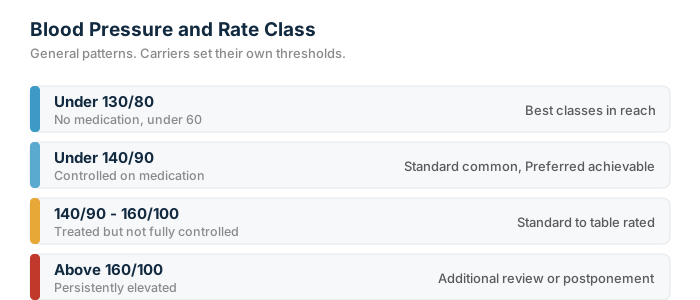
There is no single industry threshold and carriers set their own guidelines, but the general pattern is consistent. Readings under 140/90 are usually considered controlled, and under 130/80 is viewed more favorably still. Applicants under 130/80 with no medication, under age 60, are often eligible for the best available classes. Consistent readings above 160/100 frequently prompt additional review and can result in postponement until the condition stabilizes.
If you were recently diagnosed, waiting six to twelve months to establish a documented record of stable control usually produces a materially better outcome. Underwriters typically review readings over the past two years and want to see stability rather than a new prescription with no follow-up data. That said, do not wait indefinitely - premiums rise with age, so if your readings are controlled now, locking in coverage has its own value.
Yes, and this is the factor people underestimate. Hypertension alongside diabetes, tobacco use, high cholesterol, elevated weight, or a family history of early heart disease compounds rather than adds. Underwriters assess overall cardiovascular risk, not conditions in isolation. Evidence of end-organ damage. Left ventricular hypertrophy, kidney involvement, or retinal changes: changes the picture considerably, because it indicates the condition has progressed beyond blood pressure elevation alone.
Usually not, if your condition is reasonably managed. A paramedical exam gives the underwriter current readings rather than leaving them to rely on older medical records that may show worse numbers from before you started treatment. For someone whose control has improved, the exam is frequently the evidence that justifies a better rate class. Accelerated underwriting programs tend to apply broader rules without that data.
No. Stopping medication before an exam is dangerous and counterproductive. Prescription databases show what you have been prescribed regardless, and an unmedicated reading that looks good is inconsistent with a prescription history, which underwriters notice. It also puts you at genuine medical risk. Take your medication as prescribed, schedule the exam for a morning when you are rested, and avoid caffeine beforehand.
Rarely. A decline usually reflects uncontrolled readings combined with other factors, or evidence of organ involvement. It is also carrier-specific. The same applicant can be table-rated at one company and Standard at another, because carriers underwrite from their own claims experience. If you were declined and never learned why, requesting your MIB file is worth doing before applying anywhere else.
Rate classes, underwriting thresholds and policy provisions described here follow general industry practice; they are not any single insurer’s published guidelines. Life insurance rates in Texas are filed with and reviewed by the Texas Department of Insurance, which also handles consumer complaints and publishes company lookup tools. Model regulations governing policy provisions and advertising are maintained by the NAIC. Dev Gaymes is a licensed Texas producer, NPN 16654074, verifiable through the NIPR national producer database.
General education, not medical advice and not advice about your situation, and not an offer of insurance or a quote. Never change or stop any prescribed medication without consulting your physician. Blood pressure staging follows standard medical definitions; underwriting guidelines, including thresholds, medication counts and rate classes, vary by carrier, product and state, change over time, and are applied case by case at the underwriter’s discretion. Nothing here describes any particular insurer’s current guidelines. All coverage is subject to carrier underwriting approval, and policy terms, benefits, exclusions and limitations are governed solely by the issued policy contract. Always answer every application question completely and truthfully.
Bring your recent readings and medication list. We'll tell you where you're likely to land before you apply anywhere.
Prefer to talk now? Call 214-989-7704